Commonwealth
Fifty-Six Nations
Fifty-six nations, one symbolic head - His Majesty King Charles III
Spread over every continent, with a population of around 2.7 billion people which is approximately 32 per cent of the world population, there are 56 current member countries of The Commonwealth of Nations. These are listed below. All recognise His Majesty King Charles III as the visible symbol of this free association of nations and, as such, as The Head of The Commonwealth.
History
The Commonwealth dates back to the first half of the 20th century, with the decolonisation of the British Empire through increased self-governance of its territories. It was created as The British Commonwealth of Nations through the Balfour Declaration at the 1926 Imperial Conference and formalised by the United Kingdom through the Statute of Westminster in 1931. The vast majority of states which make up The Commonwealth are former territories of the British Empire out of which it developed. They are connected through their use of the English language plus cultural and historical ties.
Commonwealth citizens enjoy benefits in some member countries, particularly in the United Kingdom, and Commonwealth countries are represented within one another by high commissions (not embassies). Member states have no legal obligations to one another, though various economic, judicial and military arrangements exist between the countries. The Commonwealth Charter defines their shared values of democracy, human rights and the rule of law. Once every four years, The Commonwealth Games (formerly The Empire Games) take place, the next meeting being in Glasgow, Scotland, from 23rd July to 2nd August 2026.

Flags of the members of the Commonwealth in Parliament Square
Celebration
Commonwealth Day is celebrated on the second Monday in March (Monday 10th March in 2025). On every Commonwealth Day, a special message from The King (previously The Queen) has been broadcast in all member countries. Flags of the member states of The Commonwealth of Nations are flown in Parliament Square and at Marlborough House. The Union Flag is flown from UK public buildings on the day.
In London, an inter-denominational service is led by The Head of the Commonwealth at Westminster Abbey. Beforehand, a wreath-laying ceremony is held to commemorate the sacrifice of Commonwealth soldiers at London's Commonwealth Memorial Gates, attended by the Commonwealth Secretary-General – currently Her Excellency The Honourable Shirley Ayorkor Botchwey from Ghana. During the Abbey service, representatives of Commonwealth countries offer the flags of member states for blessing. A reception hosted by the Commonwealth Secretary-General is held afterwards.
Duties
Among other duties as Head of The Commonwealth, King Charles attends the biennial Commonwealth Heads of Government Meetings, or CHOGMs. He attended his first full CHOGM as King in Apia Samoa, in October 2024 – though he had attended the summits previously as Prince of Wales and a special one was held in London in May 2023 to mark his Coronation. The Edinburgh summit in 1997 saw, for the first time, the Monarch – The Late Queen Elizabeth II – address the opening ceremony.
The position of Head of The Commonwealth implies no executive or constitutional power. Although King Charles III is King of the fifteen member states known as the Commonwealth Realms, thirty-six other members are republics and five others have different monarchs altogether. When the Monarch attends Commonwealth summits and meets Heads of Government there individually, he or she takes no part in the working sessions of the meetings.
The King – like The Late Queen – is involved closely in The Commonwealth Games. Prior to the Games, The King's Baton Relay, a relay around the world similar to the Olympic Torch Relay, traditionally begins at Buckingham Palace, where The King entrusts the baton - carrying a message from himself as Head of the Commonwealth – to the first relay runner. At the opening ceremony of the Games, the final relay runner hands the torch back to The King or his representative, who reads the message aloud to officially open the Games.
Her Late Majesty Queen Elizabeth II
Her Late Majesty Queen Elizabeth II’s dedication to The Commonwealth and her steadying influence were well-known and widely appreciated. On becoming Head of the Commonwealth upon her accession on 6th February 1952, she stated, "The Commonwealth bears no resemblance to the empires of the past. It is an entirely new conception built on the highest qualities of the spirit of man: friendship, loyalty, and the desire for freedom and peace."
During her seventy years as its Head, The Queen undertook more than two hundred visits to Commonwealth countries and visited almost every country of the Commonwealth, some several times. During one of her many visits to Australia, in 1973, she opened the Sydney Opera House. The Queen and Members of The Royal Family undertook tours of The Commonwealth to mark her Silver, Golden and Diamond and Platinum Jubilees. She attended twenty-two CHOGMs and seven Commonwealth Games during her reign.
The Late Queen immersed herself in Commonwealth matters and relished her role in binding its nations together. She kept in regular contact with the Commonwealth Secretary-General of the day, the Governors General (the Commonwealth's central organisation) and with the organisation as a whole. Her Majesty also had regular meetings with Heads of Government from Commonwealth countries, and with High Commissioners based in London. A number of trusts and initiatives were set up in Her Majesty’s name - like the Commonwealth Canopy for forest conservation in 2015.
In 2002, the celebrations of her Golden Jubilee drew messages of appreciation from Heads of Government and ordinary people alike. Some recalled her unifying influence in the Commonwealth at times of crisis; others her unfailing enthusiasm when visiting Commonwealth countries. In a Jubilee-year article, the then Commonwealth Secretary-General Donald McKinnon (New Zealand) commented: "I wouldn't like to speculate where the Commonwealth would be without Her Majesty's fifty years of unstinting support and guidance". The former Commonwealth Secretary-General, Chief Anyaoku of Nigeria, added, "She has been more than a 'visible symbol' of a free association of nations – she has soothed its tempers, bound its wounds, encouraged its growth and, at certain times and in her own way, steeled its resolve. For her guidance and unwavering commitment, we are deeply in her debt."
In Her Majesty’s final Commonwealth Day message, she described our family of nations as “a modern, vibrant and connected Commonwealth that combines a wealth of history and tradition with the great social, cultural and technological advances of our time. That the Commonwealth stands ever taller is a credit to all who have been involved.” Especially, it was a credit to her.
-
Antigua and Barbuda

-
Australia

-
Bahamas

-
Bangladesh

-
Barbados

-
Belize

-
Botswana

-
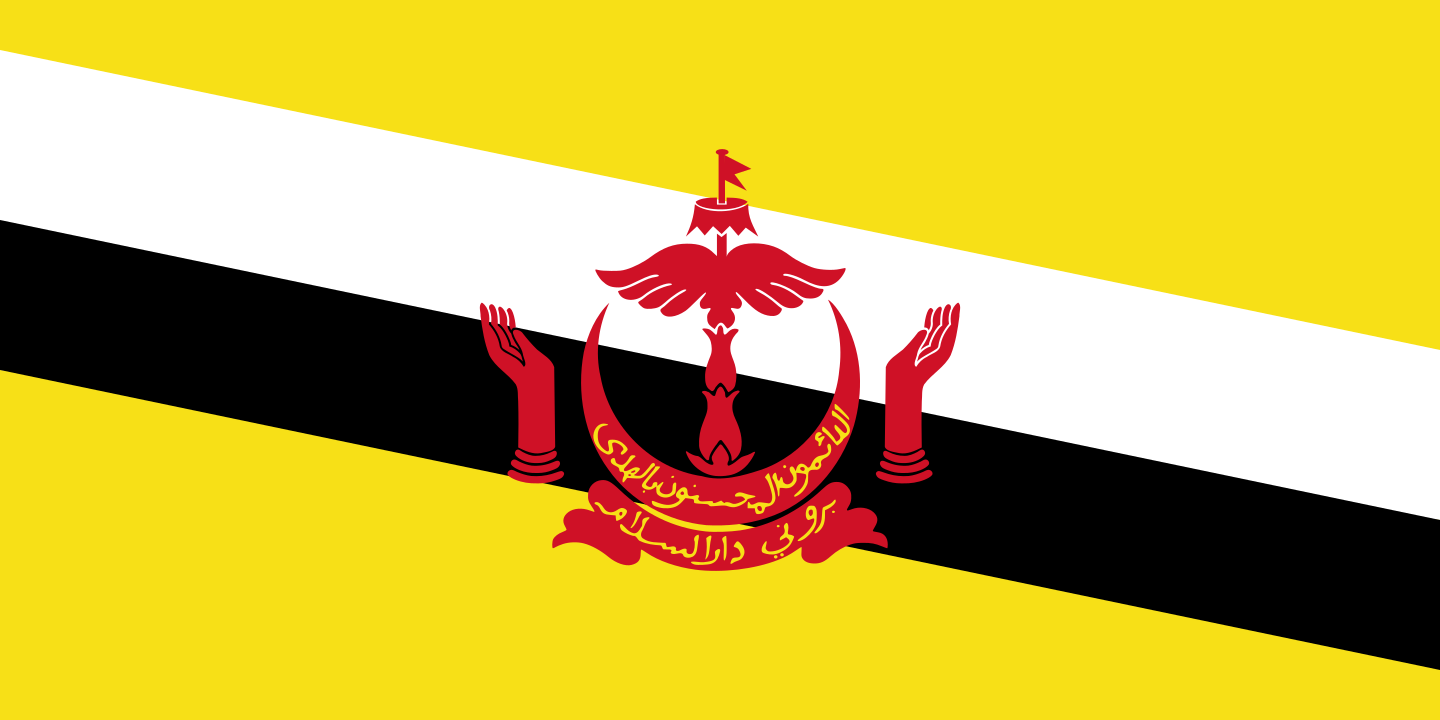
Brunei Darussalam
-
Cameroon

-
Canada

-
Cyprus

-
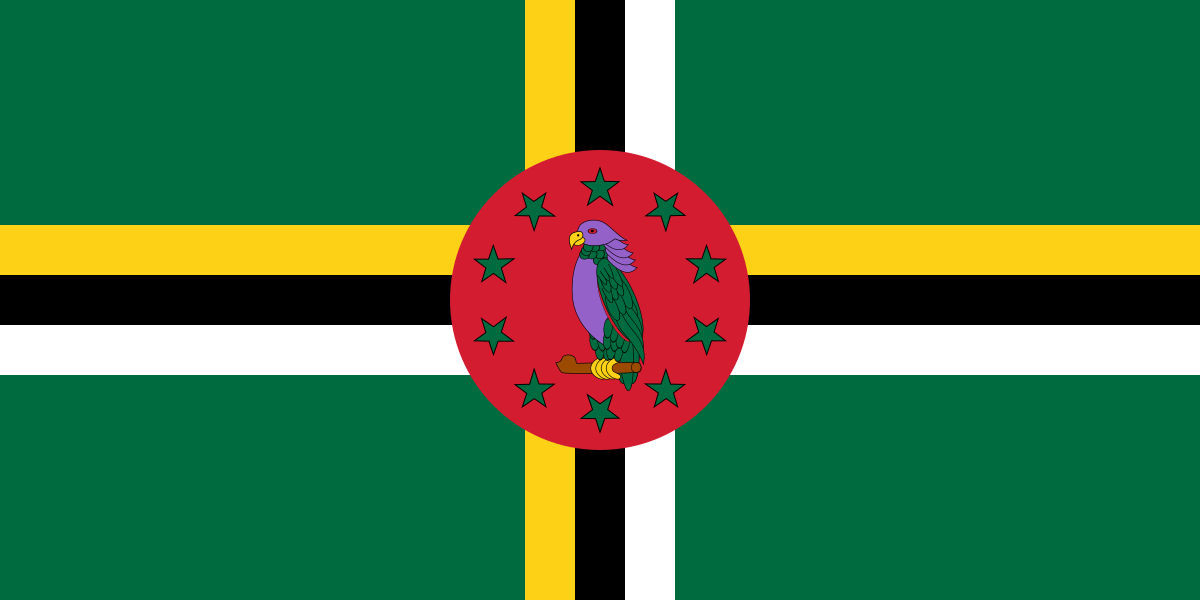
Dominica
-
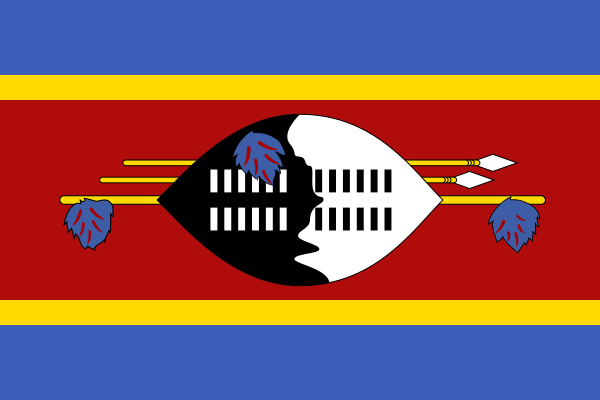
The Kingdom of Eswatini
-
Fiji

-
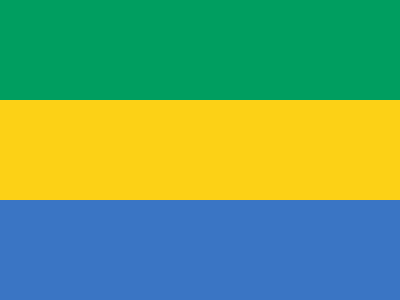
Gabon
-
Gambia

-
Ghana

-
Grenada

-
Guyana

-
India

-
Jamaica

-
Kenya

-
Kiribati

-
Lesotho

-
Malawi

-
Malaysia

-
Maldives

-
Malta

-
Mauritius

-
Mozambique

-
Namibia

-
Nauru

-
New Zealand

-
Nigeria

-
Pakistan

-
Papua New Guinea

-
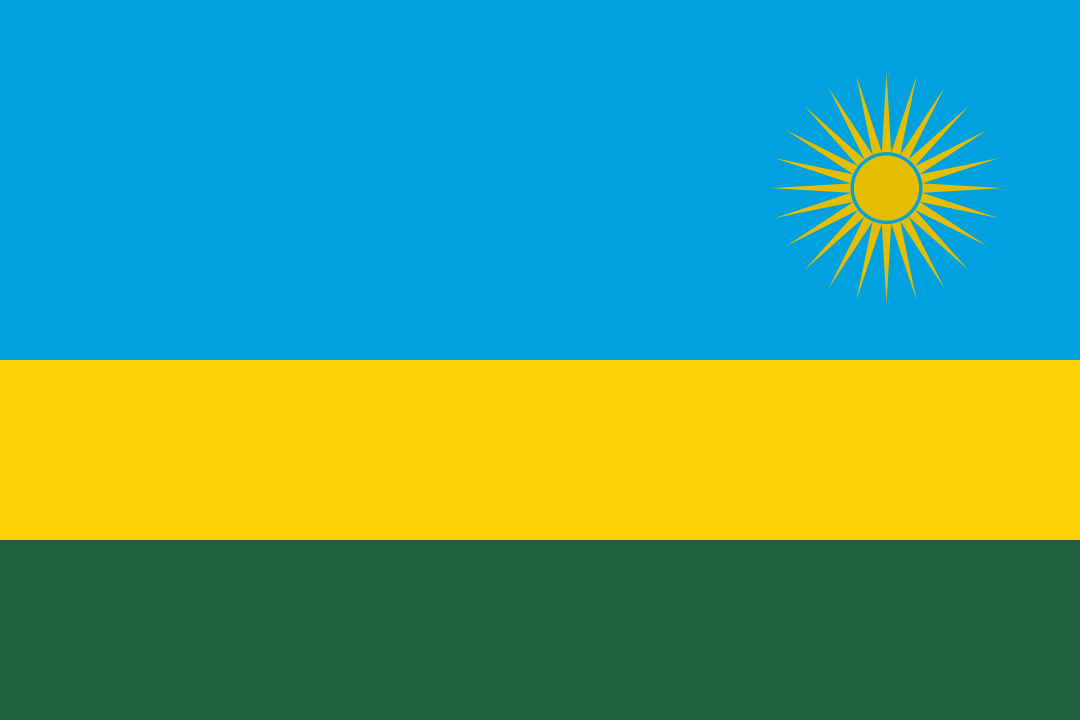
Rwanda
-
Saint Kitts and Nevis

-
Saint Lucia

-
Saint Vincent and the Grenadines

-
Samoa

-
Seychelles

-
Sierra Leone

-
Singapore

-
Solomon Islands

-
South Africa

-
Sri Lanka

-
Tanzania

-
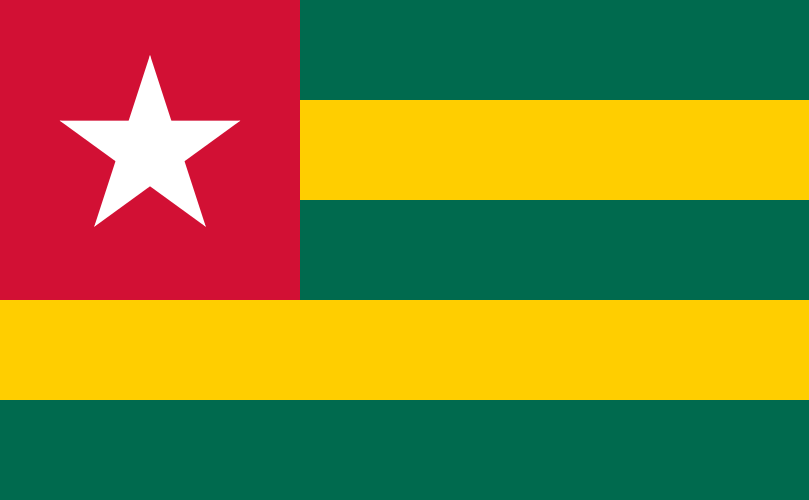
Togo
-
Tonga

-
Trinidad and Tobago

-
Tuvalu

-
Uganda

-
United Kingdom

-
Vanuatu

-
Zambia
